


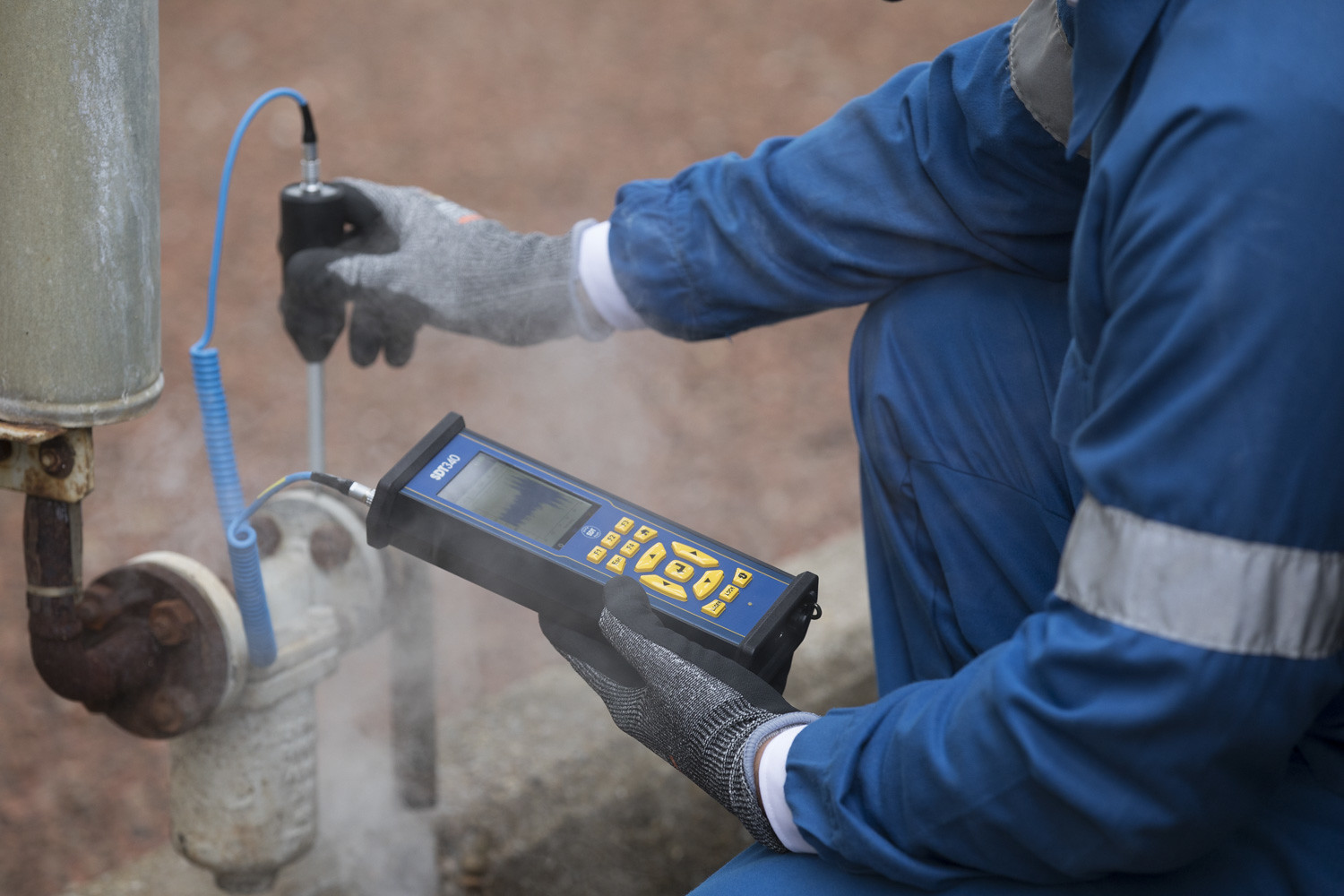
Compressed air, gas, and vacuum leaks quietly increase energy bills and wear equipment. Learn a practical approach to detect leaks early and cut operating costs.
Why small leaks become big costs
Compressed air is one of the most expensive utilities in industrial facilities. Even minor leaks force compressors to run longer, increase load, and raise energy consumption—often without anyone noticing until the monthly bill arrives.
Where leaks usually happen
Leaks most commonly occur at:
-
Quick couplers, fittings, and hoses
-
Regulators, filters, and FRL units
-
Valves and worn seals
-
Old distribution lines in high-vibration areas
-
Vacuum lines and gas networks with frequent connect/disconnect points
Why traditional detection is often not enough
In noisy plants, it’s hard to hear a leak. Access is also a challenge—many leak points are above ground, behind equipment, or in restricted areas. Relying only on sound or visual checks means many leaks remain undetected.
A practical leak program that works
You don’t need a complex system to start. A simple, repeatable routine can deliver strong results:
-
Define priority zones (compressor room, main headers, critical production lines).
-
Perform a site survey to locate and tag leak points.
-
Record findings (location, type, priority).
-
Repair and verify to confirm the leak is resolved.
-
Repeat periodically (monthly or quarterly based on plant conditions).
Quick signs you should run a leak survey now
-
Compressors run longer than expected
-
Pressure drops during peak production
-
Pneumatic tools feel “weaker” than usual
-
Unexpected compressor maintenance events
Conclusion
Leak detection is one of the fastest ways to reduce energy waste and improve reliability. Start small, measure results, then expand the routine across the facility.
CTA: Want to schedule a site survey or request support? Contact Rhein Global for a quick assessment.