


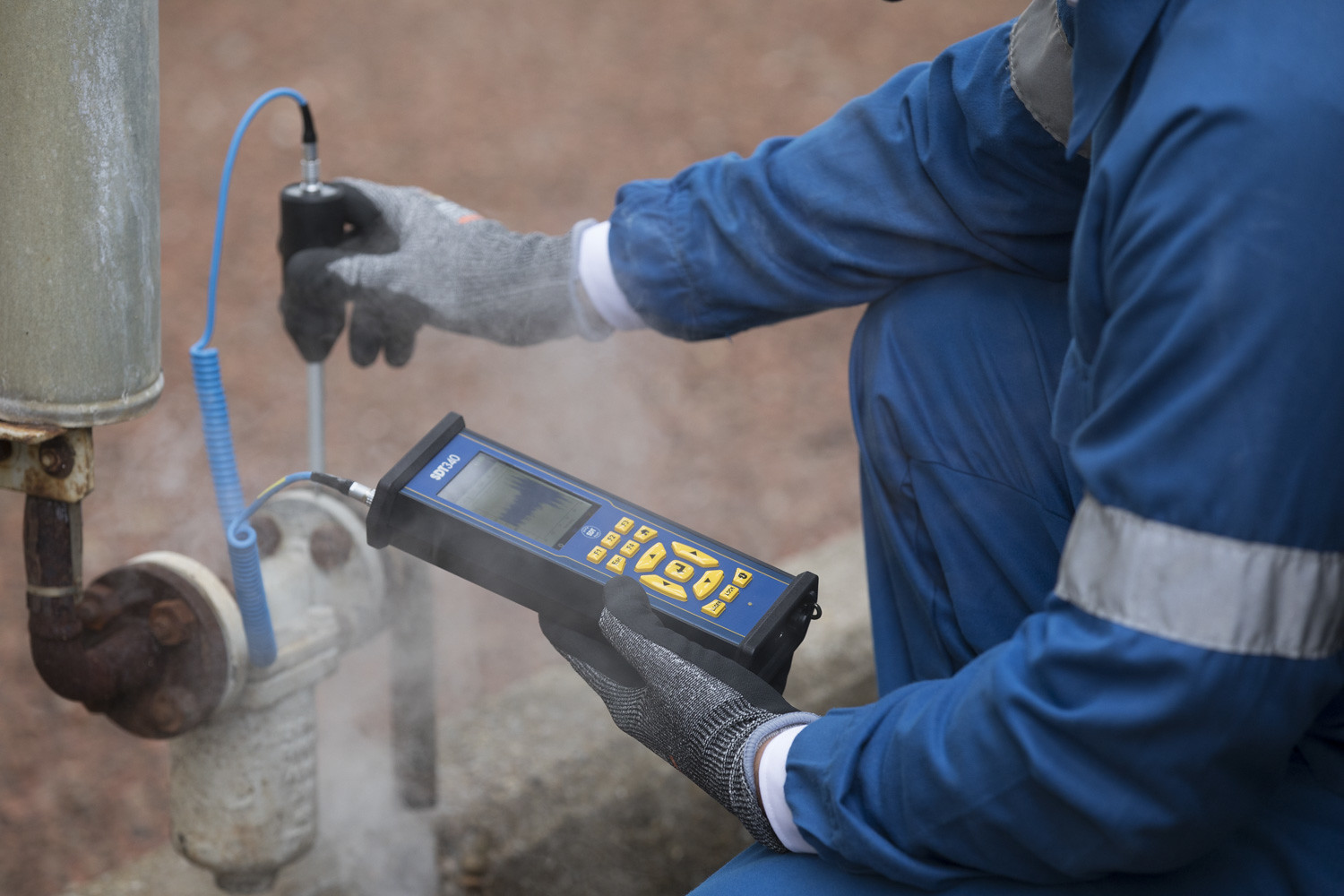
Steam Trap Testing and Maintenance
Keep your steam system clean, safe, and energy-efficient.
Steam is a critical utility in many industrial processes. Steam networks typically include extensive piping, valves, flanges, and steam traps—designed to deliver clean, dry, and efficient steam from the boiler room to points of use. As steam travels through the system, cooling is unavoidable, which leads to condensate accumulation and the presence of non-condensable gases.
Steam traps play a vital role by automatically discharging condensate and gases while preventing the loss of valuable live steam. When steam traps operate correctly, they protect heat transfer efficiency, maintain process stability, and support safe operation across the plant.
Why Steam Trap Maintenance Matters
- Steam and energy waste
- Backpressure and reduced system performance
- Process instability and quality issues
- Increased safety risk (water hammer, temperature fluctuations, and system stress)
Why Ultrasound for Steam Trap Testing?
Steam flow through traps produces distinct ultrasonic patterns. Because ultrasound detects turbulence and flow behavior, it is highly effective for diagnosing steam traps—even through heavy piping and in noisy plant environments.
Ultrasound inspections can be performed while the system is online, making testing practical and fast without production disruption.
What Ultrasound Can Reveal
- Normal cycling and modulation (healthy operation)
- No activity/silence (trap stuck closed or blocked)
- Continuous turbulent flow (trap stuck open / blow-through)
- Mechanical chatter or fluttering (unstable valve behavior)
For higher accuracy, ultrasound findings can be supported with upstream and downstream temperature checks—especially on complex systems.
Rhein Global Approach
- Define inspection routes and critical steam users
- Perform online ultrasound testing and classify trap condition
- Record findings and prioritize repairs by severity and impact
- Support corrective actions and optional re-testing/verification
Deliverables
- Steam trap survey report with trap IDs, locations, condition status, and recommendations
- Prioritized repair list to integrate into maintenance planning
- Optional re-survey to confirm savings after repairs
- Optional training/coaching for sustained steam trap management